Treatment expectations
Does Exercise Help Laser Tattoo Removal?
The short answer
Probably a little, and nobody has measured it. Exercise moves lymph fluid several times faster, and that is the route the ink fragments take out of your skin. No study has tested it on a tattoo, so I treat it as general good health, not part of the treatment.
Written by Daniel Mason, Level 4 Laser Technician at The Blackbird Wing
Published · Last reviewed · 3 min read
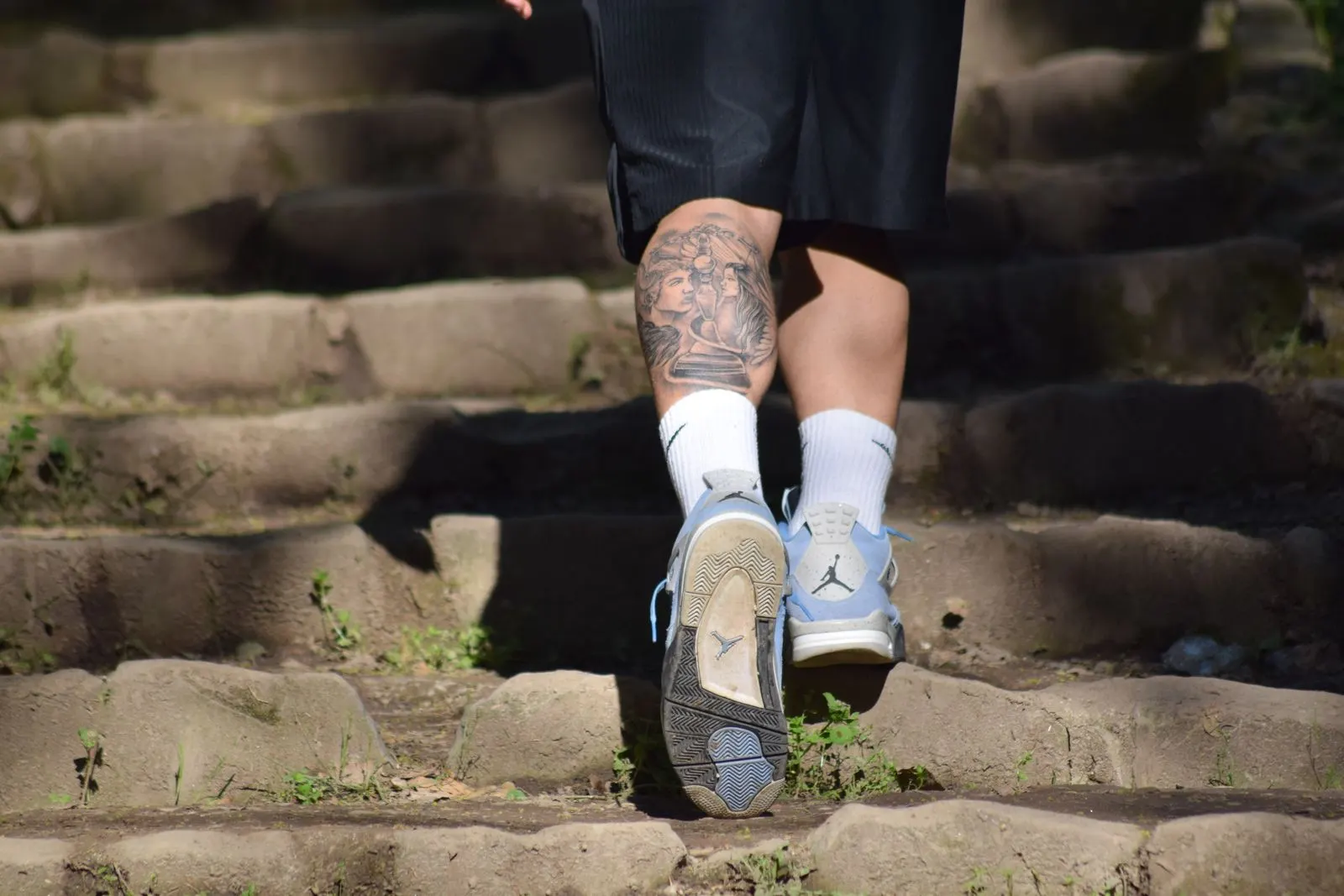
Search for this and you’ll find plenty of pages telling you that exercise flushes the ink out. The way ink leaves the skin says it should help. No study has checked whether it does.
How the ink leaves
The laser breaks the ink into smaller pieces, and immune cells in the skin (macrophages) have to let go of it. A 2018 study in mice found those cells normally swallow the ink, die, and pass it to new cells, which is why a tattoo lasts decades. The researchers suggested that laser-broken pieces are small enough to drain away through the lymph system before they get picked up again.[3]
So the question is whether exercise moves lymph fluid faster. It does, and that part has been measured.
A later review put lymph flow during steady exercise at roughly two to three times the resting rate.[2] The men with an endurance training background also cleared the tracer faster at rest than the ones without.[1]
What I tell clients
My working rule is that anything that helps your body heal will help it clear ink, and anything that slows healing will slow it. Exercise is on the right side of that line, so I treat it as general health advice, and I won’t put a number of sessions on it.
- General advice Keep exercising. Just avoid heavy sweating, saunas and hot baths for 24 to 48 hours after a session, so the treated skin stays cool and dry while it settles. The aftercare sheet has the rest.
The one lifestyle factor that has been measured in tattoo removal is smoking. Drinking water, the other thing those pages recommend, has even less behind it.
References
- 1.Havas E, Parviainen T, Vuorela J, Toivanen J, Nikula T, Vihko V. Lymph flow dynamics in exercising human skeletal muscle as detected by scintography. The Journal of Physiology. 1997;504(1):233–239. doi:10.1111/j.1469-7793.1997.233bf.xAn experiment on eight men measuring how fast a tracer left a thigh muscle at rest and during exercise.
- 2.Lane K, Worsley D, McKenzie D. Exercise and the lymphatic system: implications for breast-cancer survivors. Sports Medicine. 2005;35(6):461–471. doi:10.2165/00007256-200535060-00001A review of what was known about exercise and lymph flow, written for breast cancer care.
- 3.Baranska A, Shawket A, Jouve M, et al.. Unveiling skin macrophage dynamics explains both tattoo persistence and strenuous removal. Journal of Experimental Medicine. 2018;215(4):1115–1133. doi:10.1084/jem.20171608A laboratory study in mice of how immune cells in the skin hold on to tattoo ink.
Keep reading

Treatment expectations
Does Drinking Water Help Laser Tattoo Removal?
Plenty of websites say water flushes the ink out, but I could not find a single study behind the claim. This is what I tell clients instead.
Reviewed · 2 min readRead →

Treatment expectations
Does Smoking Affect Laser Tattoo Removal?
Smoking is the one lifestyle habit anyone has measured in tattoo removal, and smokers were less likely to have their tattoo fully gone. If you smoke and I’m treating you, this is what it means.
Reviewed · 3 min readRead →